Types of Social Engineering Attacks: 2026 Guide

Social engineering attacks are defined as manipulation techniques that exploit human psychology rather than technical vulnerabilities to gain unauthorized access, steal credentials, or redirect payments. The most recognized categories include phishing, pretexting, vishing, baiting, and business email compromise (BEC), each targeting a different channel and cognitive trigger. According to ESET, these attacks are delivered via email, SMS, voice calls, and physical methods, making them the broadest threat category in cybersecurity today. Verizon DBIR and Mandiant M-Trends both confirm that social engineering now drives the majority of initial access events across industries. Understanding the full range of attack types is the first step toward building defenses that actually work.
1. Types of social engineering attacks you need to know
ESET maps the core attack categories to their delivery channels and goals, giving security teams a practical framework for threat modeling. The list below covers every major method, from the most common to the fastest-growing vectors in 2026.
- Phishing: Mass email campaigns that impersonate trusted brands like Microsoft, PayPal, or your own IT department. The goal is credential theft or malware delivery via malicious links or attachments. Learn the full range of phishing technique variants to understand how each sub-type differs.
- Spear phishing: A targeted version of phishing where the attacker researches the victim and personalizes the message. Finance directors, executives, and system administrators are the most common targets.
- Whaling: Spear phishing aimed specifically at C-suite executives. The payoff is larger, so attackers invest more time in research and impersonation quality.
- Vishing (voice phishing): Phone calls where attackers impersonate IT support, banks, or government agencies. This vector is now the second most common initial access method globally, as covered in the next section.
- Smishing (SMS phishing): Text messages containing malicious links or urgent requests. Package delivery scams and bank fraud alerts are the most common lures.
- Pretexting: A fabricated scenario designed to build trust before making a request. A caller claiming to be an auditor who needs your login to verify a compliance issue is a classic example.
- Baiting: Leaving infected USB drives in parking lots or offering free downloads that contain malware. The victim’s curiosity does the attacker’s work.
- Quid pro quo: Offering a service, such as free IT support, in exchange for credentials or access. Common in help desk impersonation attacks.
- Tailgating and piggybacking: Physical access attacks where an unauthorized person follows an employee through a secured door. No technical skill required.
- Quishing (QR code phishing): Malicious QR codes placed on posters, emails, or physical surfaces that redirect victims to credential-harvesting pages. This vector bypasses most email link scanners.
- ClickFix scams: A newer technique where fake browser or software error messages instruct users to paste malicious commands into their terminal or run a script to “fix” the problem. Developers and IT staff are the primary targets.
- Business email compromise (BEC): An attacker impersonates an executive or vendor to redirect wire transfers or approve fraudulent invoices. No malware is involved, which is what makes it so hard to detect with technical filters alone.
Pro Tip: Never treat these attack types as isolated. Multi-vector social engineering examples, like a vishing call that references a phishing email sent the day before, are increasingly common and far more convincing than single-channel attacks.
2. How AI and voice phishing are changing the threat model

Voice phishing surged to 11% of intrusions globally in 2025, making it the second most common initial infection vector and overtaking email phishing, which dropped to 6%. That shift is not a coincidence. It reflects a deliberate attacker pivot toward channels where technical defenses are weakest and human judgment carries the most weight.
AI is the accelerant behind this shift. Generative AI enables attackers to craft context-aware lures that mirror an organization’s actual communication style, reference real projects, and manufacture urgency that feels entirely plausible. A pretexting call that references your company’s actual HR software, uses your manager’s name, and arrives during a known audit period is nearly impossible to flag on instinct alone.
“Attackers pivoting to voice-based social engineering require organizations to include call scripts and help-desk workflows in their threat models.” — M-Trends 2026, Google Cloud
The healthcare sector illustrates this trend most sharply. Pretexting increased significantly in healthcare breaches in 2025, ranking second only to phishing, driven by AI-enhanced impersonation tactics aligned to clinical workflows. An attacker who knows the names of a hospital’s EHR system, its billing department head, and its insurance partners can build a pretext that bypasses even a trained employee’s skepticism.
The practical implication is that detection can no longer rely on spotting grammatical errors or suspicious links. Organizations need verification behaviors baked into their processes, not just their training slides.
3. How attacks differ when targeting individuals vs. organizations
The goals, tactics, and defenses for social engineering attacks shift considerably depending on whether the target is an individual or an enterprise. Understanding that difference is what separates generic security awareness from a defense strategy that actually reduces risk.
| Dimension | Individual targets | Organizational targets |
|---|---|---|
| Primary goal | Credential theft, financial fraud, sextortion | Payment redirection, data access, system compromise |
| Common vectors | Smishing, baiting, ClickFix scams, romance scams | BEC, help desk vishing, spear phishing, pretexting workflows |
| Trust exploited | Personal relationships, fear of authority | Internal hierarchy, vendor relationships, IT processes |
| Defense priority | Verification habits, skepticism training | Process controls, identity auditing, MFA governance |
For individuals, the most damaging attacks are often the least technical. Sextortion campaigns use personal data scraped from breaches to manufacture credibility. ClickFix scams target developers by mimicking legitimate error messages from tools like Microsoft Teams or npm, as seen in the Axios npm hack where a fake Teams error message was used to install a remote access trojan on a maintainer’s machine.
For organizations, the attack surface is wider and the workflows more complex. BEC attacks exploit trust with no malware involved, redirecting payments or gaining approvals through impersonation alone. That means email filters and endpoint detection tools produce zero signal. The defense must live in the process itself, such as requiring a secondary verification call for any payment change request above a defined threshold.
Pro Tip: Build your social engineering defense workflow around the specific roles in your organization that handle money, credentials, or system access. Those are the roles attackers research first.
4. How to compare and defend against the top attack types
Defending against social engineering attacks requires matching your controls to the specific mechanics of each attack type. A single awareness training session does not address the difference between a BEC wire fraud attempt and a tailgating incident at a server room door.
| Attack type | Delivery channel | Primary defense |
|---|---|---|
| Phishing / spear phishing | MFA, link inspection, phishing simulation | |
| Vishing | Phone / voice | Call verification scripts, callback to known numbers |
| Pretexting | Multi-channel | Identity verification protocols, training on pretext patterns |
| BEC | Email / voice | Dual-approval for payments, out-of-band confirmation |
| Baiting | Physical / web | USB port controls, software installation policies |
| Tailgating | Physical | Mantrap doors, badge-only access, visitor escort policies |
| Quishing | Email / physical | QR code scanning policies, visual inspection training |
M-Trends 2026 emphasizes that organizations should focus on process and behavior controls around sensitive state changes, specifically MFA resets and payment approvals, as the highest-value defense layer against social engineering. That guidance reflects a hard truth: most organizations over-invest in detection tools and under-invest in the procedural controls that actually stop attacks at the point of exploitation.
Effective defense combines three layers. First, verification behaviors that require employees to validate urgent requests through an independent channel before acting. Second, identity auditing that tracks SaaS integrations and flags anomalous access patterns. Third, training that teaches employees to recognize manipulation tactics, not just malware indicators. The human resilience assessment approach from Thepitstop frames this as testing real behavior under simulated pressure, which is far more predictive than quiz-based awareness programs.
- Require a callback to a verified number before any MFA reset is processed.
- Audit all SaaS integrations quarterly for excessive permissions or dormant accounts.
- Run multi-vector simulations that combine email, voice, and physical scenarios to test realistic attack chains.
- Treat any request that creates urgency and bypasses normal process as a red flag by default.
Key takeaways
Social engineering attacks succeed because they exploit human trust and urgency, not technical vulnerabilities, making process controls and verification behaviors the most effective defense layer.
| Point | Details |
|---|---|
| Voice phishing is now dominant | Vishing overtook email phishing as the second most common initial access vector in 2025. |
| AI amplifies pretexting | Generative AI enables context-aware lures that mirror real workflows, making detection by instinct unreliable. |
| BEC requires process controls | Business email compromise uses no malware, so technical filters produce no signal and process audits are the only defense. |
| Attack type determines defense | Each social engineering method requires a matched control, from call verification scripts for vishing to dual-approval for BEC. |
| Testing beats training alone | Simulated multi-vector attacks reveal real behavioral gaps that awareness programs and quizzes cannot surface. |
The uncomfortable truth about social engineering defense in 2026
Most organizations I work with have invested heavily in phishing awareness training. They run annual modules, send simulated phishing emails, and track click rates. Then a vishing call gets through to their help desk, an attacker resets MFA for a privileged account, and the whole technical stack becomes irrelevant.
The problem is that the threat model most security teams operate from is about five years behind the actual attack surface. Email phishing is now the less dangerous vector. Voice phishing, AI-assisted pretexting, and multi-step social engineering workflows that span days or weeks are where the real damage is happening. Mandiant’s M-Trends 2026 data makes this impossible to ignore, yet most training programs have not caught up.
What I have found actually works is building verification into the workflow itself, not just into people’s heads. A policy that requires any MFA reset to be confirmed via a callback to a number on file is more reliable than training 500 employees to recognize a sophisticated pretext. Process beats awareness when the attack is sophisticated enough.
The other shift I advocate for is testing across channels. If you only simulate phishing emails, you are only measuring one dimension of human resilience. The organizations that are genuinely hard to compromise run simulations that include voice calls, physical access attempts, and collaboration platform lures. That is what assessing social engineering risk actually looks like in practice.
— Nicholas
Find out where your organization is actually vulnerable
Understanding the types of social engineering attacks is the foundation. Knowing which ones your team would fall for is what drives real security improvement.
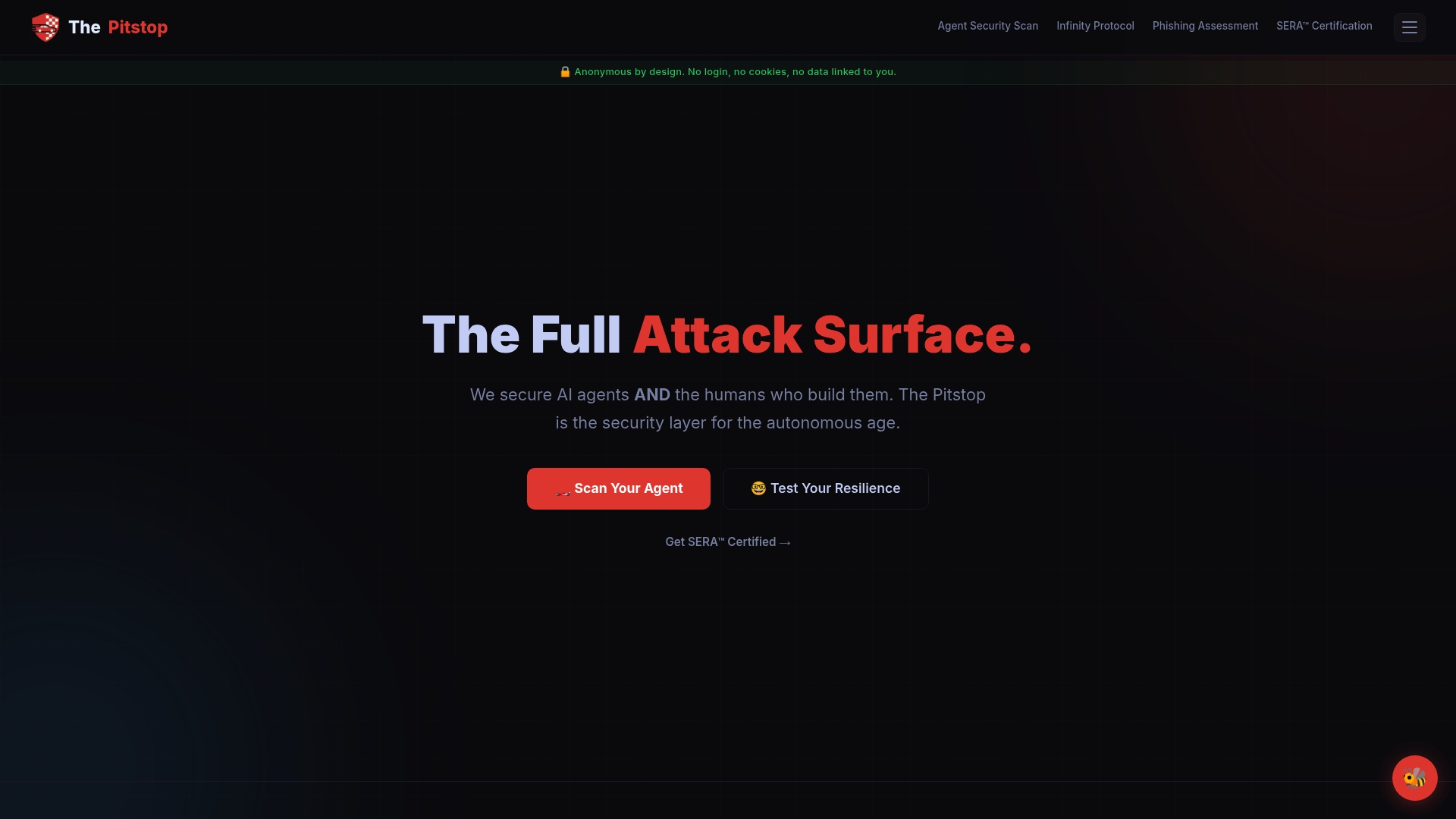
Thepitstop offers a free SERA™ Certification program designed to assess your organization’s social engineering resilience across the full attack surface, including phishing, vishing, pretexting, and physical vectors. The certification tests real behavior under simulated pressure and produces a credentialed outcome your team can act on. For organizations running AI agents alongside human operators, the free AI agent security scan adds a second layer of assessment that covers machine-side vulnerabilities alongside human susceptibility. Both tools are free to start and built for the 2026 threat environment.
FAQ
What are the most common types of social engineering attacks?
Phishing, vishing, pretexting, BEC, and baiting are the most frequently reported attack types. ESET maps each to its delivery channel, with email, voice, and SMS being the dominant vectors.
How does AI change social engineering attacks?
Generative AI allows attackers to build context-aware pretexts that mirror real organizational workflows, making lures significantly harder to detect by instinct or pattern recognition alone.
Why is voice phishing now more dangerous than email phishing?
Vishing reached 11% of global intrusions in 2025, overtaking email phishing at 6%, according to Mandiant M-Trends 2026. Voice calls bypass email filters and exploit real-time social pressure in ways that written messages cannot.
What is the best way to defend against BEC attacks?
BEC relies on trust and impersonation with no malware involved, so technical filters are ineffective. The most reliable defense is a dual-approval process for any payment change, combined with out-of-band confirmation via a verified phone number.
How do you test for social engineering vulnerabilities?
Effective testing uses simulated multi-vector attacks that combine email, voice, and physical scenarios to surface real behavioral gaps. Quiz-based awareness programs measure knowledge, not behavior, and are a poor predictor of how employees respond under actual pressure.