How to Mitigate Social Engineering: 2026 Guide

Social engineering mitigation is defined as the practice of reducing human and technical vulnerabilities that attackers exploit through psychological manipulation to gain unauthorized access to systems, data, or physical spaces. Knowing how to mitigate social engineering is the most pressing defense challenge for organizations in 2026, because the attack surface now includes both human operators and AI agents acting on their behalf. Phishing-resistant multi-factor authentication, formal verification protocols, behavioral detection, and a no-blame reporting culture form the core of any credible defense. No single control stops a determined attacker. Layered defenses do.
How to mitigate social engineering: the core framework
Effective mitigation combines three interdependent layers: technical controls that remove exploitable attack vectors, procedural controls that formalize human decision-making, and cultural controls that change how people respond under pressure. Strip any one layer and the other two degrade quickly. A password manager protects credentials, but it cannot stop an employee who verbally confirms a wire transfer to a convincing impersonator. Verification protocols close that gap. Training builds the reflex to use those protocols even when an authority figure is pushing for speed.
The median click time on a phishing link is just 21 seconds, with data entry beginning at 28 seconds. That figure makes one thing clear: technical controls cannot rely on human reaction time alone. The defense architecture must assume that some clicks will happen and plan accordingly.

What psychological tactics do social engineers exploit?
Social engineers do not hack systems first. They hack people. The psychological levers they pull are consistent across attack types: urgency, authority, trust, and social proof. A caller claiming to be from IT support who needs your credentials “before the system locks you out in five minutes” is activating all four simultaneously.
Common attack formats include:
- Phishing: Mass or spear-targeted emails designed to harvest credentials or deliver malware
- Vishing: Voice calls impersonating executives, vendors, or IT staff
- Pretexting: Fabricated scenarios, such as a fake vendor audit, to extract sensitive information
- Tailgating: Physical access gained by following an authorized person through a secured door
- Deepfakes: AI-generated audio or video impersonating known individuals, now accessible to low-skill attackers
Cognitive overload amplifies every one of these vectors. When employees are busy, tired, or context-switching, their ability to detect inconsistencies drops sharply. Attackers time their attempts accordingly, targeting Monday mornings, end-of-quarter deadlines, and post-incident chaos when security teams are distracted.
The harder truth is that human helpfulness is a feature, not a bug. People are wired to assist colleagues and defer to authority. Social engineers exploit that wiring deliberately. Post-click training delivered immediately after a simulated attack did not significantly reduce future susceptibility, which confirms that knowledge alone cannot override in-the-moment psychological hijacking.
Pro Tip: When you feel urgency pushing you toward an immediate action involving credentials, money, or access, treat that urgency itself as the threat indicator. Legitimate requests tolerate a 60-second verification pause.
What technical and procedural controls prevent social engineering attacks?
Technical controls remove the attack surface that social engineers depend on. Procedural controls formalize the human decisions that technology cannot automate. Both are required.
Phishing-resistant MFA with FIDO2/WebAuthn
FIDO2/WebAuthn hardware keys are the top recommended defense from CISA and leading security practitioners because they cannot be bypassed by SIM swapping, prompt bombing, or adversary-in-the-middle phishing proxies. YubiKey and Google Titan Security Key are the two most widely deployed hardware authenticator options. Unlike SMS or app-based one-time passwords, hardware keys bind authentication to the physical device and the legitimate domain, making credential theft structurally impossible even when a user clicks a phishing link. Phishing-resistant authentication eliminates the credential theft vectors present in 85% of social engineering breaches.
Out-of-band verification protocols
Out-of-band verification is the single most effective procedural control for stopping social engineering attacks that bypass technical defenses. The principle is simple: confirm any sensitive request through a second, independent communication channel. A finance employee who receives a wire transfer request by email calls the requestor back on a number from the company directory, not the number in the email. The challenge is social pressure. Employees hesitate to “insult” a senior executive by questioning their request. Embedding verification as a formal, policy-mandated workflow removes that social burden from the individual entirely.
Password managers and credential hygiene
Password managers such as 1Password, Bitwarden, and Dashlane generate and store unique credentials per site, which eliminates credential stuffing as a viable follow-on attack after a social engineering compromise. When every account uses a different, randomly generated password, one stolen credential cannot cascade into a broader breach.
Network and endpoint protections
VPNs protect session data on public networks where session hijacking is trivial. Email filtering tools such as Proofpoint and Mimecast block the majority of phishing attempts before they reach inboxes. Endpoint detection and response platforms including CrowdStrike Falcon and Microsoft Defender for Endpoint provide behavioral monitoring that catches post-compromise activity even when the initial intrusion succeeded.
| Control | Attack vector addressed | Defensive value |
|---|---|---|
| FIDO2/WebAuthn hardware keys | Phishing, SIM swap, prompt bombing | Eliminates credential theft structurally |
| Out-of-band verification | Pretexting, vishing, BEC fraud | Stops authorized-seeming fraudulent requests |
| Password manager | Credential stuffing, reuse attacks | Limits blast radius from any single compromise |
| Email filtering (Proofpoint, Mimecast) | Phishing, malware delivery | Reduces phishing volume reaching employees |
| EDR platform (CrowdStrike, Defender) | Post-compromise lateral movement | Detects attacker activity after initial breach |
Pro Tip: Require out-of-band verification for any transaction above a defined dollar threshold or any request that modifies access permissions. Write it into policy so employees can cite the rule rather than their personal judgment.
What role does training play in reducing social engineering success?
Training is necessary but not sufficient. The gap between knowing a threat exists and acting correctly under pressure is where most security awareness programs fail. One-time or just-in-time training does not bridge that gap because psychological hijacking operates faster than conscious recall.
The most effective training programs build a universal reflex rather than a checklist. Behavioral science supports a four-step model: Feel, Slow Down, Verify, Act. When an employee feels urgency, discomfort, or pressure, that feeling becomes the trigger to pause rather than comply. This reflex can be conditioned through repeated, realistic simulation. You can explore phishing simulation workflows that apply this model at scale across different employee risk profiles.
Effective social engineering awareness training programs share four characteristics:
- Role-targeted simulations: Executives, finance staff, and IT administrators face different attack profiles and need scenario-specific training, not generic modules
- Ongoing cadence: Quarterly simulations outperform annual training because attacker tactics, especially AI-generated deepfakes and voice clones, evolve continuously
- Near-miss reporting: Employees who report unsuccessful social engineering attempts provide early warning intelligence that security teams cannot get any other way
- No-blame culture: Punishing employees who click simulated phishing links suppresses reporting. Organizations that remove shame from the process see reporting rates increase and detection windows shrink
The reporting culture point deserves emphasis. A single employee who reports a suspicious call, even one they did not fall for, may be flagging an active campaign targeting the entire organization. That intelligence is worth more than any technical alert.
How does an assume-compromise mindset improve detection and response?
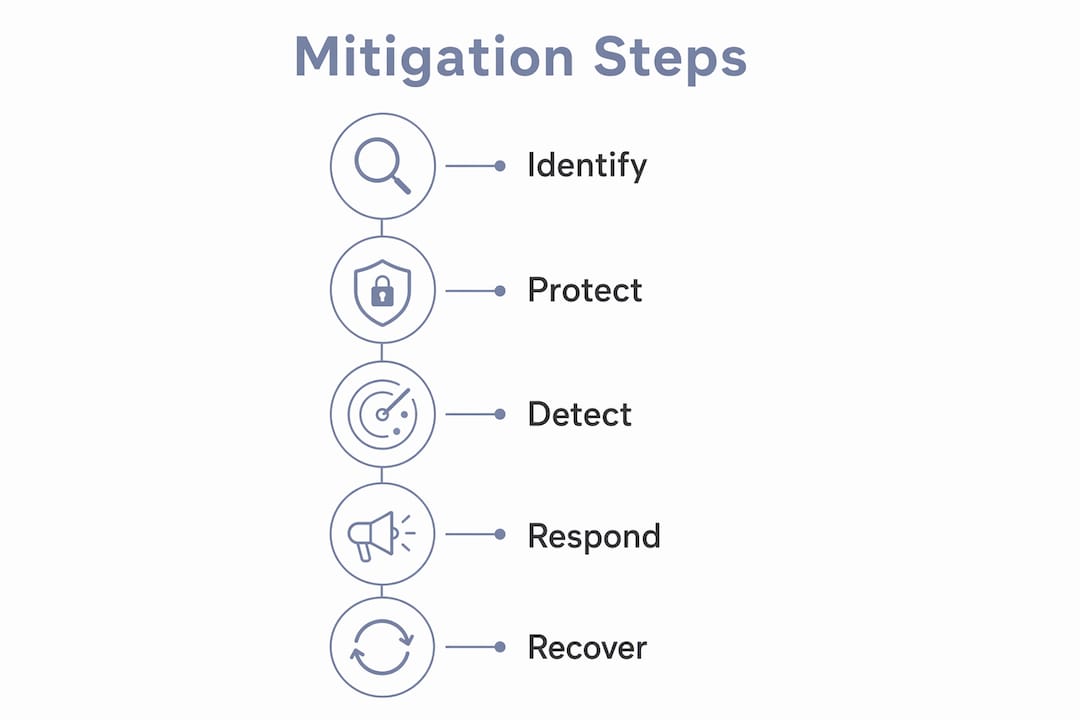
Prevention alone is insufficient. Detection and containment reduce the damage from breaches that prevention could not stop, and some breaches will always get through. The assume-compromise philosophy treats every credential, session, and access grant as potentially compromised and builds detection architecture accordingly.
Behavioral analytics platforms monitor for the signals that follow a successful social engineering attack: anomalous login locations, access to resources outside normal job function, lateral movement across systems, and privilege escalation attempts. These signals appear even when the attacker is using legitimate credentials obtained through pretexting or phishing. Platforms like Microsoft Sentinel, Splunk, and Vectra AI apply machine learning to baseline normal behavior and surface deviations in near real time.
| Detection signal | What it indicates | Response priority |
|---|---|---|
| Login from new geography within 2 hours of normal login | Credential compromise or session theft | Immediate account suspension |
| Access to HR or finance systems outside job role | Lateral movement post-compromise | Isolate session, investigate |
| Bulk file download or export | Data exfiltration attempt | Block and preserve forensic evidence |
| Privilege escalation request after hours | Attacker establishing persistence | Deny and alert security team |
Zero trust architecture operationalizes the assume-compromise mindset at the network level. Zero trust principles require continuous verification of every user, device, and session rather than trusting anything inside the network perimeter. When a social engineering attack succeeds and an attacker gains valid credentials, zero trust limits the blast radius by denying access to resources the compromised account does not explicitly need. For organizations building defense workflows for AI teams, zero trust is the foundational architecture because AI agents operate with elevated access and represent high-value compromise targets.
Incident response plans must be tailored specifically for social engineering breaches. A practitioner’s guide to incident scope is useful here because social engineering breaches often have a wider blast radius than initially apparent. The attacker may have been inside the environment for days before detection, accessing systems through legitimate credentials that left minimal forensic traces.
Key takeaways
Mitigating social engineering requires layered technical controls, formal verification workflows, and a detection-first culture because no single defense stops a determined attacker.
| Point | Details |
|---|---|
| FIDO2/WebAuthn is the top technical control | Hardware keys eliminate credential theft in 85% of social engineering breach scenarios. |
| Out-of-band verification must be policy, not habit | Embedding verification in formal workflows removes social pressure from individual employees. |
| Training builds reflexes, not just knowledge | The Feel-Slow-Verify-Act model conditions resistance that survives psychological pressure. |
| Reporting culture is a detection asset | Near-miss reports from employees provide early warning intelligence no technical tool can replicate. |
| Assume-compromise limits breach damage | Behavioral analytics and zero trust architecture contain attacker movement after credentials are stolen. |
What I’ve learned building defenses against social engineers
I have spent years watching organizations invest heavily in security awareness training and then express genuine surprise when a well-crafted pretexting call bypasses all of it. The uncomfortable truth is that social engineering works precisely because it targets the behaviors we consider virtues: helpfulness, deference to authority, and the desire to avoid conflict. Training people to be suspicious of those instincts is genuinely hard, and anyone who tells you a 30-minute annual module solves it is selling you something.
What actually moves the needle is removing the decision from the individual wherever possible. When verification is a policy requirement rather than a personal judgment call, the employee is no longer choosing to be difficult. They are following a rule. That reframe changes everything. I have seen finance teams go from apologizing for verification requests to citing policy with confidence, and that shift alone reduces successful pretexting attacks dramatically.
The other thing I would push back on is the prevention-only mindset. Most security programs are built around stopping attacks before they land. That is necessary, but it creates a dangerous blind spot. The organizations I have seen handle breaches best are the ones that had already asked, “What do we do when this works?” They had detection tooling in place, incident response playbooks tested, and a reporting culture that surfaced early signals. Prevention buys you time. Detection and response determine the outcome.
— Nicholas
How Thepitstop supports your social engineering defense
Building a layered defense against social engineering requires tools that test both your technology and your people. Thepitstop was designed specifically for that challenge.
The SERA™ Certification program gives organizations a structured, evidence-based assessment of their social engineering resilience, covering human behavior, verification workflows, and technical controls in a single credential framework. For teams that want to stress-test human operators specifically, Thepitstop’s phishing simulation and AI-driven monitoring tools identify high-risk individuals and roles before attackers do. You can also run a free AI agent security scan to assess your AI-facing attack surface alongside your human one. The threat does not separate cleanly between machines and people, and neither should your defense.
FAQ
What is the most effective single control against social engineering?
Phishing-resistant MFA using FIDO2/WebAuthn hardware keys is the top recommended control because it eliminates credential theft structurally, even when a user clicks a phishing link. CISA and leading security practitioners consistently rank it above all other individual defenses.
How do you recognize a social engineering attempt?
Social engineering attempts typically combine urgency, authority, and a request for credentials, money, or access. The Feel-Slow-Verify-Act model teaches people to treat that combination of pressure and request as the primary warning signal.
Why does awareness training alone fail to prevent social engineering attacks?
Post-click training does not significantly reduce future susceptibility because psychological hijacking operates faster than conscious recall. Effective programs combine simulation, reflex-building, and a no-blame reporting culture rather than relying on knowledge transfer alone.
What is the assume-compromise mindset in social engineering defense?
Assume-compromise treats every credential and session as potentially stolen and builds behavioral detection to surface attacker activity post-breach. Behavioral analytics platforms and zero trust architecture are the primary tools for operationalizing this approach.
How should organizations handle employees who fall for simulated phishing attacks?
Organizations should treat simulation failures as training opportunities, not disciplinary events. Punishing employees who click suppresses near-miss reporting, which is one of the most valuable early-warning signals available to security teams.